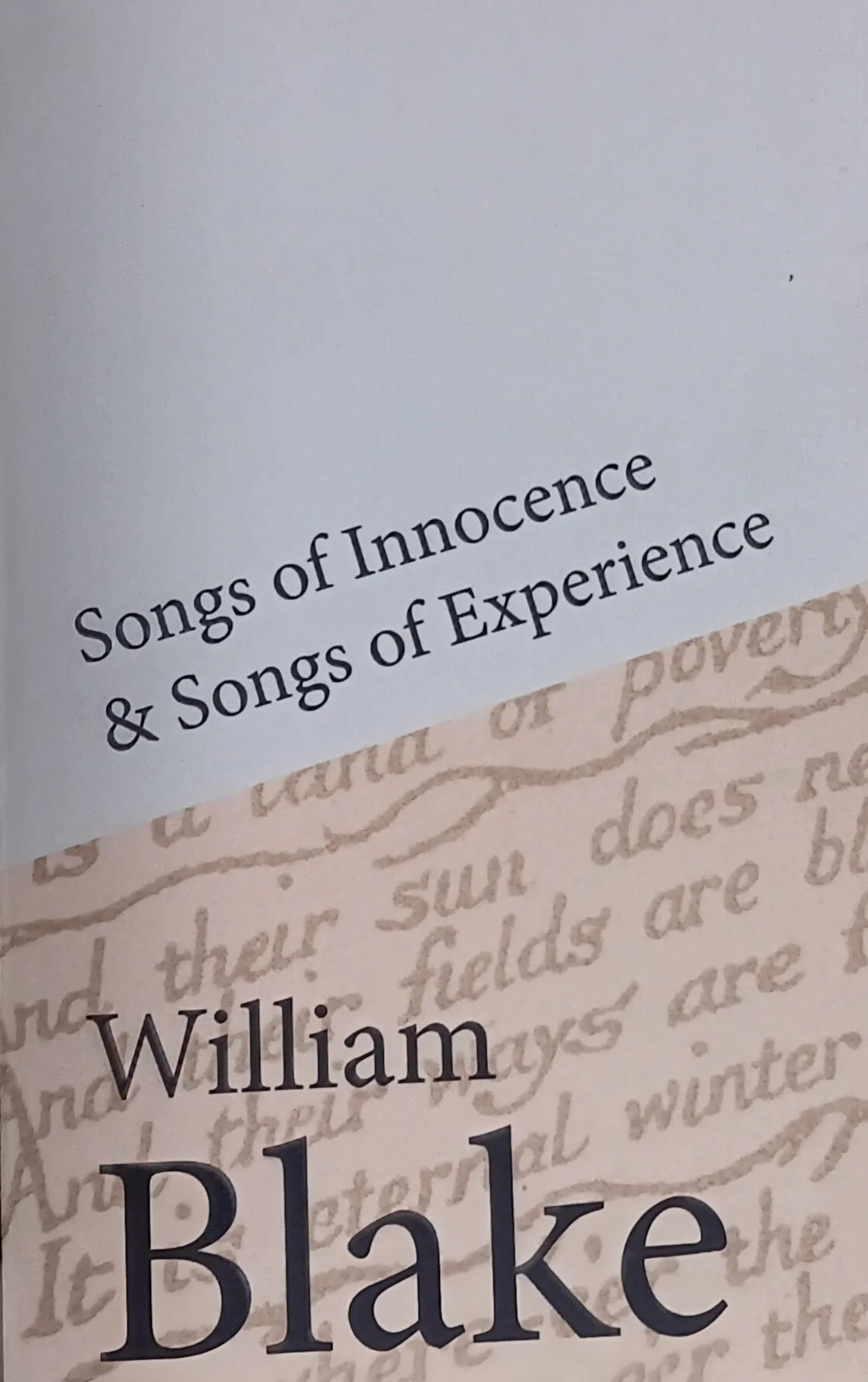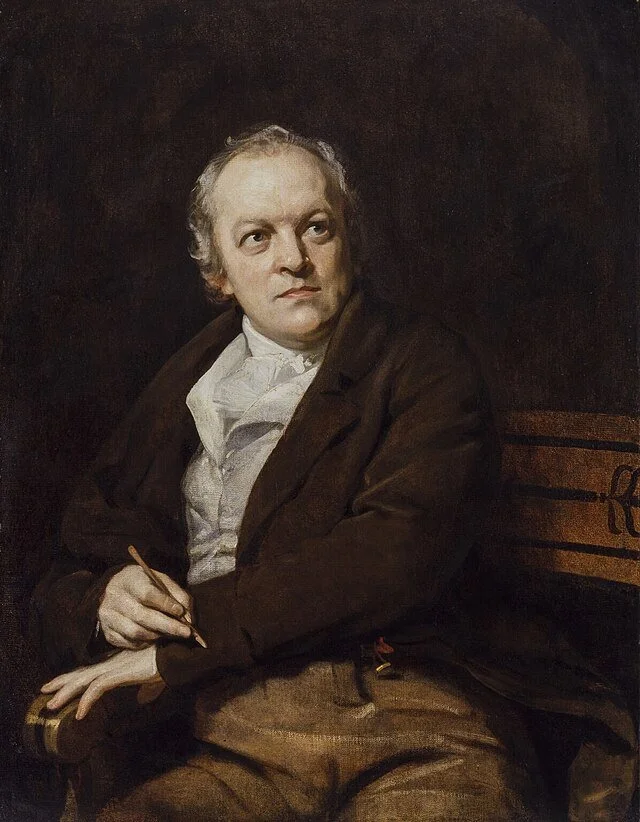
WILLIAM BLAKE, 1757-1827
Born in London on November 28, 1757, William Blake was a seminal figure of the Romantic Age, though his profound contributions to poetry and the visual arts remained largely unacknowledged during his lifetime. Raised in a middle-class household, Blake’s formal education was limited to drawing classes and a pivotal apprenticeship in engraving beginning in 1772. This technical foundation enabled him to revolutionize book production through his invention of "relief etching" in 1788, a method he utilized for his celebrated illuminated works.In 1782, Blake married Catherine Boucher. Despite her initial illiteracy, Blake instructed her in reading, writing, and printmaking; she subsequently became an indispensable collaborator in his artistic endeavors and a steadfast emotional pillar. Blake’s career was marked by prolific creativity and spiritual intensity. His later years were defined by a commissioned series of engravings for Dante’s Inferno, a project he pursued with devotion until his death in 1827.Following his passing, Catherine maintained that his spirit guided her business affairs until her own death in 1831. Tragically, a significant portion of Blake's unconventional manuscripts was later destroyed by his executor, Frederick Tatham, who deemed the content too radical. Today, Blake is revered as a visionary whose synthesis of text and image remains unparalleled.Books by William Blake